
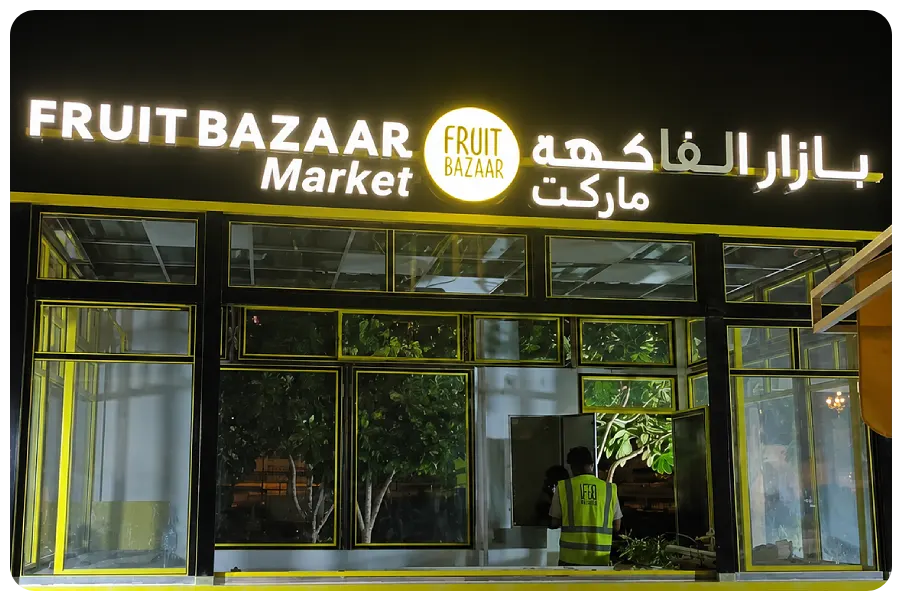
An LED signboard is one of the lower-maintenance assets a storefront owns, right up until the day it isn’t. Most of the failures we get called out for aren’t manufacturing defects; they’re heat, dust and moisture problems that a short seasonal check would have caught.
Heat is the real enemy, not the sun
LED modules themselves tolerate UAE sun reasonably well. What shortens their life is heat building up inside a sealed cabinet with no ventilation path, which stresses the driver and power supply long before the LEDs themselves degrade. If a sign has run hot for two or three summers without any airflow check, the driver is usually the first thing to fail, not the diodes.
What a basic seasonal check should cover
- IP rating integrity: seals and gaskets on outdoor cabinets degrade with UV exposure, and a compromised seal lets dust and humidity reach the driver.
- Driver temperature: cabinets should have a ventilation gap or fan; if you can’t find one, that’s worth flagging to whoever installed it.
- Power supply age: most quality drivers are rated for 50,000+ hours, but that clock runs faster in a hot cabinet than a cool one.
- Visible dimming or flicker: uneven brightness across a board is often the earliest sign a driver is starting to fail, well before a section goes dark.
Why warranty terms matter more than the sign itself
Two signboards can look identical and perform very differently over five years depending on driver quality and warranty terms. When we spec a board, we look for driver warranties in the 3–5 year range specifically, since that tends to correlate with components rated for regional heat rather than a generic spec sheet.
If your signboard is heading into its second or third UAE summer without ever having been opened up for a look, it’s worth a quick inspection before the heat peaks, not after something fails.


