
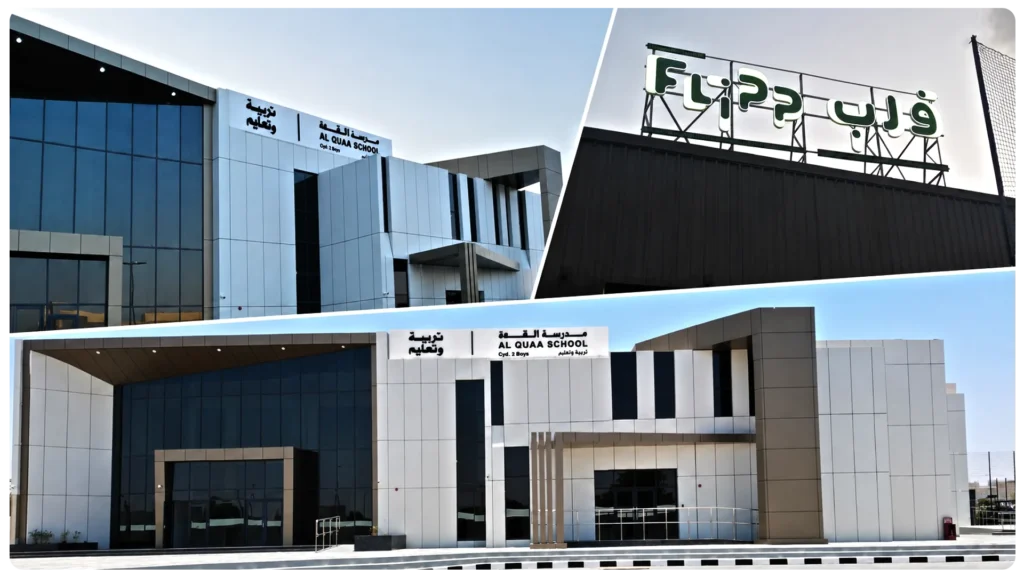
Most businesses plan their outdoor sign first and treat indoor signage as an afterthought. That’s backwards. A strong storefront sign earns the walk-in, but it’s the indoor wayfinding, shelf-edge graphics and directional signage that shape whether that visit turns into a sale.
Start with the job each sign has to do
Outdoor signage has seconds to work. It needs to be legible from a moving car or a busy sidewalk, which means bold contrast, simple typography and, in the UAE, materials that can handle direct sun and dust without fading within a year. Indoor signage has a different job: it has more time with the customer, so it can carry more detail, such as promotions, product information and directional cues, without losing them.
Materials that make sense for Dubai’s climate
For outdoor boards, we default to UV-stable acrylic or aluminium composite with weatherproofed LED modules, since anything less tends to yellow or delaminate within a couple of summers. Indoors, there’s more room to use printed vinyl, dibond or backlit fabric panels, since they’re not fighting direct sunlight or heat.
Plan the transition, not just the two signs
The best-performing storefronts we’ve built treat the entrance as one continuous experience: the outdoor sign sets an expectation, and the first indoor graphic a customer sees should deliver on it immediately. If your outdoor signage promises a specific brand feel, mismatched indoor signage undoes that in the first five steps inside.
A simple way to audit your current setup
- Stand across the street: is your outdoor sign legible at a glance, day and night?
- Walk in the door: does the first indoor sign match the tone your outdoor sign set?
- Check materials against the last UAE summer: any fading, warping or peeling?
If any of those raise a flag, it’s usually cheaper to fix at the design stage than to keep patching a sign that was never built for the environment it’s in.


